There is a Kyoto that the guidebooks will not show you. Not the gilded surface of Kinkaku-ji at midday, nor the orange corridor of Fushimi Inari choked with selfie sticks, but a slower city that exists in the folds between the famous places—a Kyoto of wet stone steps, raked gravel, and the faint smell of green tea rising from a neighbor’s kitchen at five in the afternoon.
I came back to this city in my sixtieth year with a single rule: do not enter any temple that appears in the top ten of any list. The result was a three-week masterclass in attention. At Shinnyo-do, on the wooded eastern slopes, I sat for an hour watching a single maple leaf oscillate between orange and scarlet as the clouds shifted. No one disturbed me. The only sound was a bell, somewhere, that someone I could not see was ringing for someone I would never meet.
To travel slowly in Kyoto is to accept that the city does not reveal itself to the hurried. It waits, with the patience of a thousand-year river, for the traveler willing to sit down.
The trick, I have come to believe, is lodging. Skip the hotels near the station and find a small ryokan north of the Imperial Palace, one with a garden of six stones and a staff of three. You will sleep on a futon. You will eat breakfast at a low table. You will walk out each morning into a neighborhood where the bakery knows what time you like your bread, and the city will organize itself around your pace rather than the other way around.
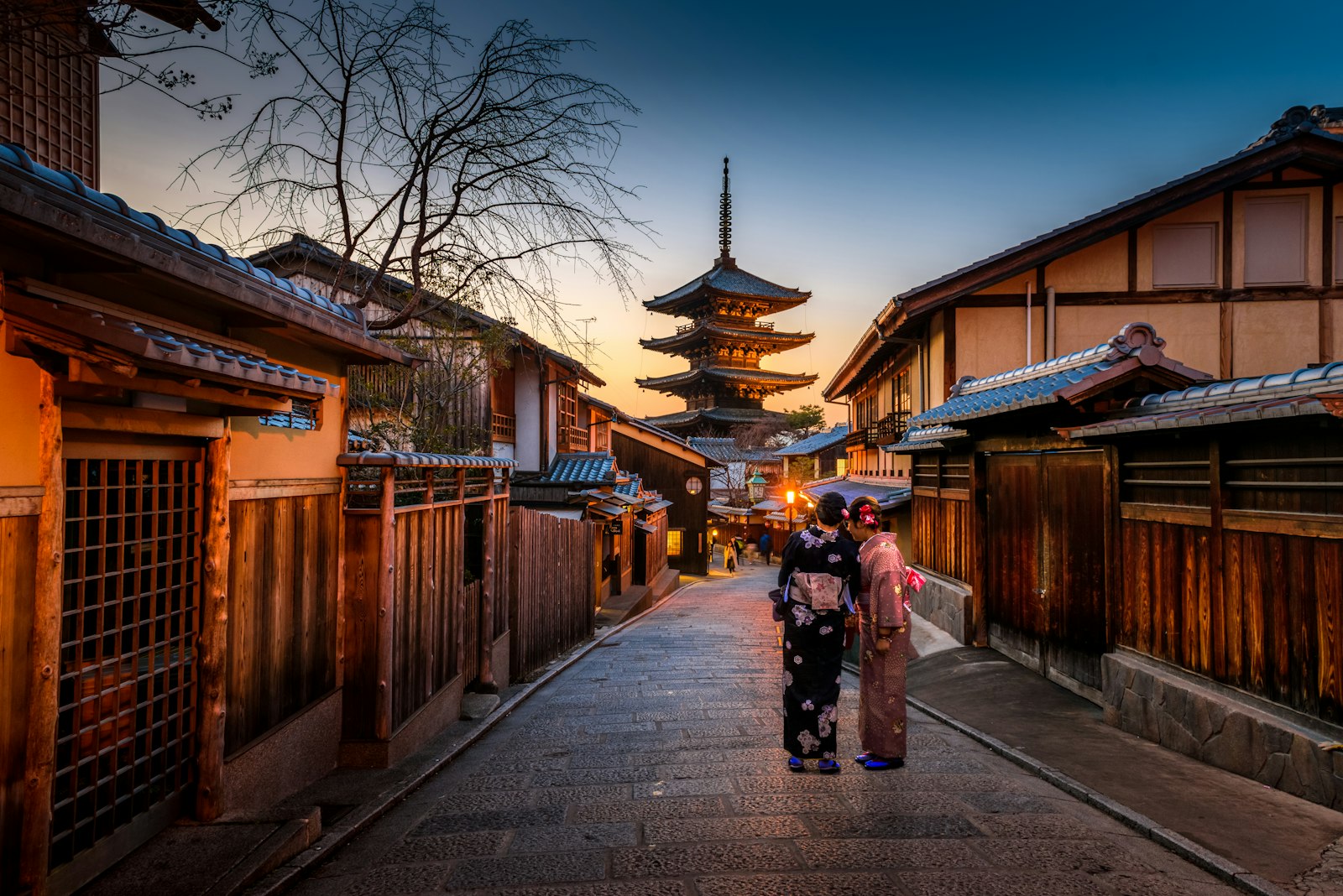
Honen-in is the temple I return to most often. It is free. It is almost always empty. A pair of white sand mounds flanks the inner gate—swept into patterns each morning by a single caretaker who has been doing the work, he told me, for forty-three years. “The design is never the same twice,” he said. “That is the whole point.” He bowed. I bowed. I walked in.
For the traveler of a certain age, Kyoto is generous in ways younger visitors miss. The sidewalks are flat. The subways have elevators. The tea shops keep chairs near the window for those who would rather sit than kneel. Nothing has to be earned through hardship here. The city has already done the hard work of staying itself for twelve centuries, and all it asks of you is that you slow down enough to notice.
I left this time with a pair of socks from a stall near Nishiki Market, a tin of matcha from a shop that has been run by the same family since the seventeenth century, and the feeling—rare, these days—that I had been somewhere, not simply passed through. The fast city remains for those who want it. The slow one is still here for the rest of us.